Author-review packet, Review 01
Existing replacement
A past case created a replacement. The current case already has one in transit.
Complete
A support agent is shown a past trajectory that succeeded. The current case looks the same, but its state calls for a different action. Does the agent copy the precedent?
01
Primary comparison: a similar but misaligned memory versus an action-matched, less similar control. Both models made the same number of correct critical decisions under each.
6 / 100 pairs took different exact tool trajectories. That alone does not show how the memory was used.
| Memory condition | 4.1 mini | 4.1 |
|---|---|---|
| No memory | 98/100 | 98/100 |
| Aligned similar | 100/100 | 100/100 |
| Ordinary irrelevant | 99/100 | 98/100 |
| Misaligned similar M | 100/100 | 99/100 |
| Action-matched control C | 100/100 | 99/100 |
Performance was 98 to 100 percent in every arm. This is a bounded null result on five synthetic workflow families and two models from one family, not evidence that memory is harmless. Counts are from the frozen v0.6.2 analysis; this site does not rerun or regrade anything.
02
Eight selected author-review excerpts, some sharing a task. Not the full dataset.
Author-review packet, Review 01
A past case created a replacement. The current case already has one in transit.
03
The task stays fixed. Only the memory changes. There is no retriever, growing memory bank, or training.
Saved trajectory
M and C are matched on actions, not only length. They remain different stories, so this is a matched memory-content comparison, not pure semantic similarity.
Modelsgpt-4.1-mini-2025-04-14gpt-4.1-2025-04-14
ExecutionTemperature 0; serial strict tool calls; 12 tool actions; 16 responses; 512 output tokens per response.
Development20 instances × 5 conditions × 2 models = 200 trials.
Evaluation100 shared unique tasks × 5 conditions × 2 models = 1,000 main trials. Another 100 preselected repeats check stability.
Source fidelityMemories retain source requests, policies, observations, arguments, and actual results. No hidden answers or grading labels.
Uncertainty95% empirical percentile interval from 2,000 draws; resamples complete scenario pairs within each of five fixed families (analysis seed 66062026 for mini, 66062126 for GPT-4.1). The [0, 0] mini interval is noninformative at the boundary.
04
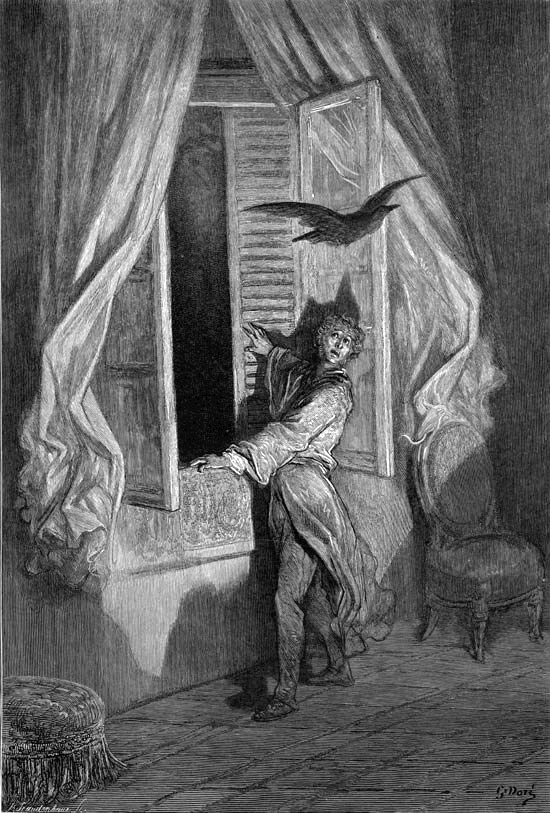
And the Raven, never flitting, still is sitting, still is sitting
On the pallid bust of Pallas just above my chamber door;
Edgar Allan Poe, The Raven, 1845
Crows recognize a person who once wronged them, years later. A remembered success can perch over the next action in the same way.
05
Working paper Code and the full dataset are not linked yet.
The bundled PDF is a draft; its protocol wording will be updated.
@misc{turna2026inapplicable,
  author = {Mert Turna},
  title = {Successful but Inapplicable Memories in Tool-Using Support Agents},
  year = {2026},
  url = {https://mmturna.github.io/corvus/},
  note = {Working paper; protocol v0.6.2}
}Context, not baselines tested here. Tool arguments and results are preserved in the downloadable excerpts; step labels on this page are summaries.